

暂无商品咨询信息 [发表商品咨询]

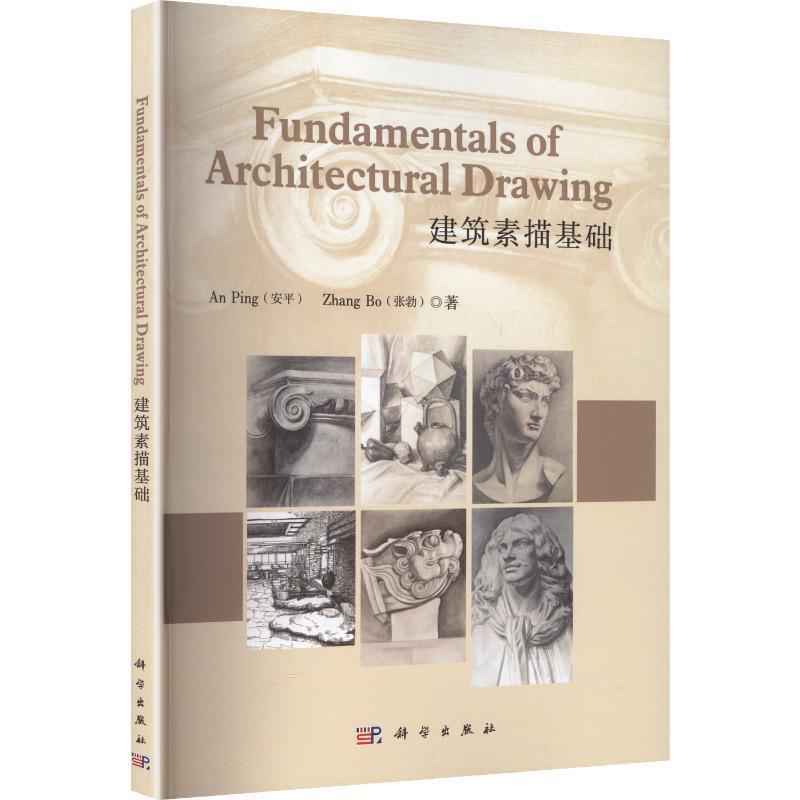
This book is developed in accordance with the pedagogical requirements for fine art courses in architectural programs at Chinese higher education institutions. The authors are the faculty professors from the School of Architecture and Art at North China University of Technology in Beijing, who have carefully compiled the content based on years of practical teaching experience. Structured to progress from basic to advanced topics, the book systematically covers key aspects of drawing, including its origin and evolution, concepts and objectives, tools and materials, perspective and composition, light and shadow and structure, fundamental techniques, and analysis of exemplary works.
With comprehensive explanations, carefully selected illustrations, and a strong practical focus, this book is suitable for students in related fields of colleges and universities such as architecture, urban and rural planning, landscape architecture, art and design, and related disciplines, as well as for art enthusiasts in general.
Authors’ Comments
Preface
1 Introduction to Drawing001
1.1 Overview of Drawing 003
1.2 A Brief History of Drawing 004
1.2.1 The Antiquity Period 005
1.2.2 The Renaissance Period 015
1.2.3 The Baroque Period 025
1.2.4 The French Period 028
1.2.5 The Modern Period 034
1.2.6 The Contemporary Period 042
1.3 Why Study Drawing 046
1.4 How to Learn Drawing 046
1.5 How to Draw Well 049
1.6 Purpose and Significance of Drawing Courses 050
1.7 Teaching Methods for Drawing Courses 050
2 Usage Instructions of Drawing Tools and Materials052
2.1 Common Drawing Tools and Materials 052
2.1.1 Pencils 053
2.1.2 Charcoal Sticks 055
2.1.3 Charcoal Pencils 055
2.1.4 Erasers 056
2.1.5 Paper 058
2.1.6 Blending Stumps 059
2.1.7 Drawing Boards 060
2.1.8 Pencil Sharpeners 060
2.1.9 Others 062
2.2 Drawing Postures 062
2.2.1 Standing Posture 062
2.2.2 Sitting Posture 064
2.2.3 How to Observe 064
2.3 Line Drawing Practice 065
2.3.1 Pencil Gripping Method 065
2.3.2 Line Exercises 067
3 Perspective Drawing071
3.1 Learning Objectives of Perspective 072
3.2 A Brief History of Perspective Evolution 072
3.3 Types of Perspective Drawing 080
3.3.1 One-Point Perspective 080
3.3.2 Two-Point Perspective 081
3.3.3 Foreshortened Circles 083
3.4 Method of Observing the Clock 085
3.5 Perspective Problems 087
3.5.1 Distance vs. Size 087
3.5.2 Distance vs. Clarity 088
4 Principles of Composition 089
4.1 Basic Principles of Composition 089
4.2 Main Methods of Composition 090
4.2.1 Focal Points in Composition 090
4.2.2 Symmetrical Composition 090
4.2.3 Triangular Composition 091
4.2.4 Golden Ratio in Composition 091
4.3 Examples of Composition Analysis 093
5 The Rules of Light and Shadow and the Observation Methods096
5.1 The Rules of Light and Shadow 096
5.1.1 The Concept of Light and Shadow 096
5.1.2 The Three Major Sides 097
5.1.3 The Five Fundamental Values 097
5.1.4 Analytical Example 099
5.2 Observation Methods 101
5.2.1 Holistic Observation 101
5.2.2 Connected Observation 101
5.2.3 Intrinsic Observation 102
5.3 Drawing Steps 102
5.4 Picture Processing 103
5.5 Common Mistakes 104
6 Structure Drawing109
6.1 What Is the Structure 111
6.2 Focus of Structure Drawing 112
6.3 Structure Drawing and Light and Shadow Drawing 114
7 Drawing Geometric Solids 115
7.1 Purpose of Drawing Geometric Soilds 115
7.2 Drawing Methods of the Geometric Solids 115
7.3 Drawing the Simple Geometric Solids 116
7.3.1 Drawing a Geometric Cube 116
7.3.2 Drawing a Geometric Sphere 118
7.3.3 Drawing a Geometric Quadrangular Pyramid 120
7.3.4 Drawing a Geometric Hexagonal Prism 125
7.3.5 Drawing a Geometric Cylinder 127
7.3.6 Drawing a Geometric Rectangular Combination 130
7.4 Drawing the Combined Geometric Solids 134
7.4.1 Key Points to Note 134
7.4.2 Drawing a Combination of a Bracket Set and a Cuboid 134
7.4.3 Drawing a Combination of a Component and a Rectangular Combination 137
8 Drawing Still Lifes141
8.1 Purpose of Drawing Still Lifes 141
8.2 Drawing Methods of the Still Lifes 142
8.3 Examples of Drawing Still Lifes 145
8.3.1 Drawing a Bracket Set 145
8.3.2 Drawing a Glazed Component 146
8.3.3 Drawing a Glass Container 148
8.3.4 Drawing Simple Combined Still Lifes 150
8.3.5 Drawing Complex Combined Still Lifes 152
9 Masterpieces Appreciation 155
9.1 Complex Still Lifes 157
9.2 Featured Still Lifes 159
9.3 Plaster Portraits 164
9.4 Landscape Drawings 171
9.4.1 Architectural Landscape Drawing 172
9.4.2 Landscape Quick Sketch 176
10 Concluding Remarks 179
Bibliography180
Picture Index182
Postscript 190
| 基本信息 | |
|---|---|
| 出版社 | 科学出版社 |
| ISBN | 9787030836175 |
| 条码 | 9787030836175 |
| 编者 | 安平,张勃 著 著 |
| 译者 | -- |
| 出版年月 | 2026-02-01 00:00:00.0 |
| 开本 | 16开 |
| 装帧 | 平装 |
| 页数 | 206 |
| 字数 | 385000 |
| 版次 | 1 |
| 印次 | 1 |
| 纸张 | 一般胶版纸 |
暂无商品评论信息 [发表商品评论]
暂无商品咨询信息 [发表商品咨询]
 官方微信
官方微信

